
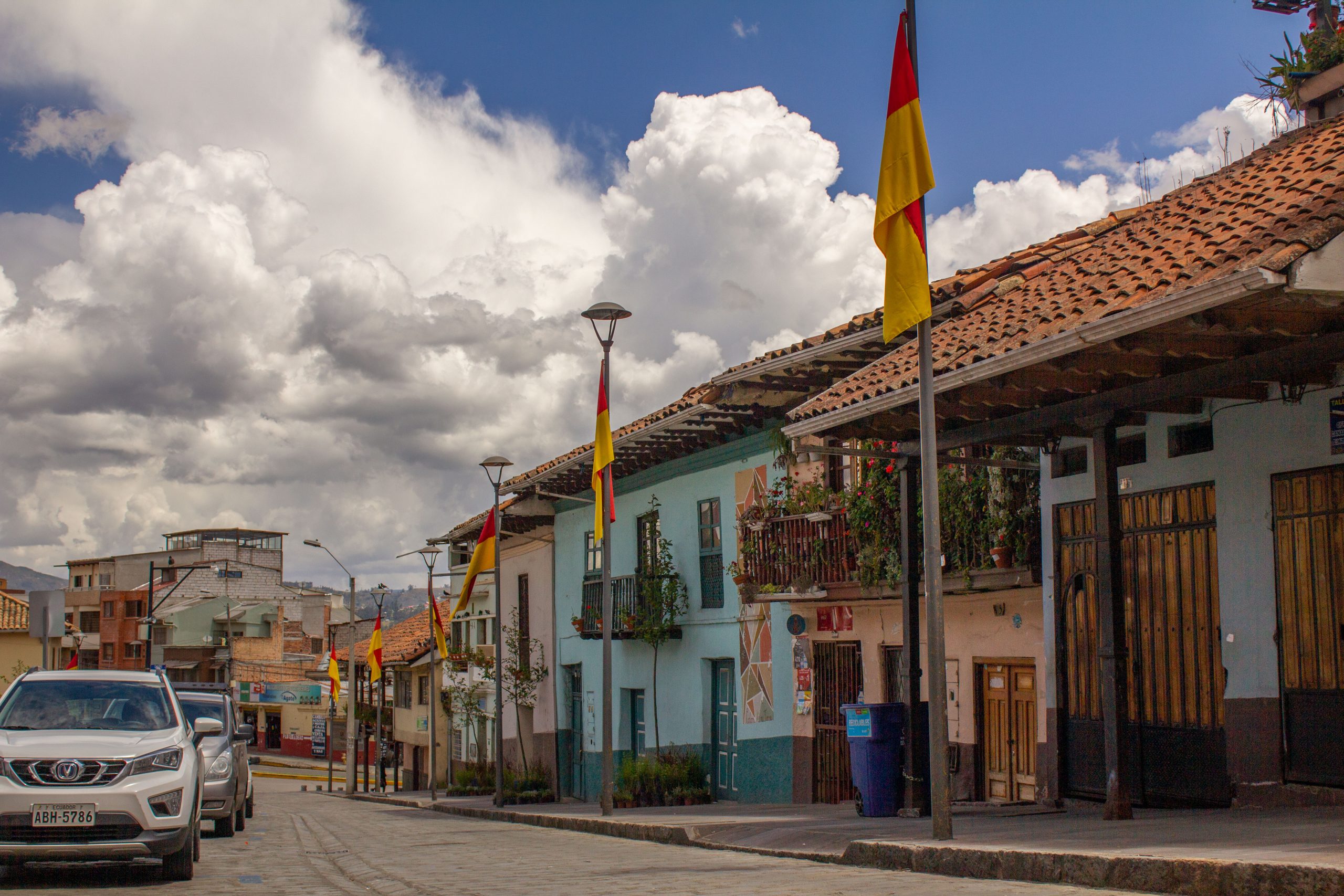
The El Vecino parish, located in the northern part of the city of Cuenca, is considered one of the most important due to its historical, heritage, economic, and cultural significance; Rafael María Arízaga Street is the road that connects the neighborhoods of El Vecino, El Chorro, and El Cuartel. The street was named “Calle Real del Vecino” by the local community, since it was through this area that the liberation troops, led by Father Xavier Loyola, entered to free Cuenca from Spanish rule.
There are numerous attractions in the neighborhood. The following are particularly noteworthy:
Monument and Small Square of the Rollo de la Picota
The first governor of Cuenca ordered the construction of three pillories to be placed at the city’s exits, which were intended to serve as a symbol and reminder of the justice of the Spanish Crown. Today, the only pillory that remains is the one in the Vecino neighborhood, located at the intersection of Rafael María Arízaga and del Rollo streets.
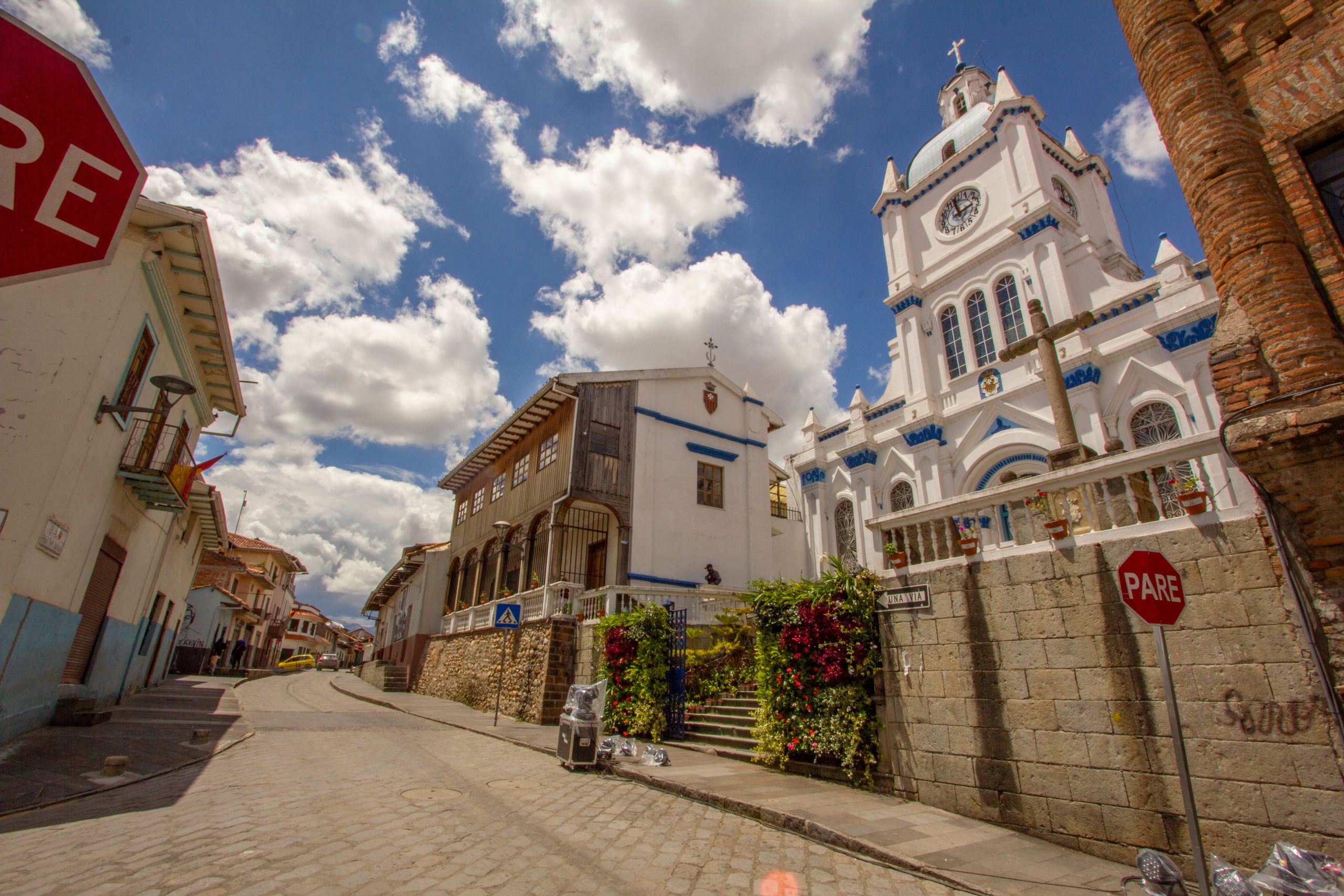
Church of St. Joseph
The first Catholic religious institution in this area began as a chapel “outside the city walls,” as it was located at the northern edge of the colonial district and dedicated to Saint Christopher. However, it was not until the 20th century that construction of the church and convent began, driven by the Order of the Mercedarians, who were transferred from La Merced to El Vecino. Work on the façade began in 1920, and two decades later, construction of this majestic religious edifice was completed.
Rafael María Arízaga and Manuel Vega
Mass Schedule: Tuesday through Thursday at 7:00 a.m. – Monday through Saturday at 7:00 p.m. – Sundays all morning and at 6:00 p.m.
Monument and Small Square of the Virgin of Mercy
Since the Mercedarians were unable to return to their old church, they demanded that the statue of the Virgin of La Merced be moved with them to El Vecino; however, the devotion of the people of the La Merced neighborhood prevented this from happening; instead, the people themselves donated a new statue to the Order of the Mercedarians. Then, in 1956, a monument was erected in honor of the Virgin of La Merced to commemorate the 400th anniversary of the city’s founding, and a park was also established at the intersection of Huayna Cápac and Rafael María Arízaga avenues.
Municipal Museum of Toquilla Straw and Hats
Since the 19th century, the Barrio del Vecino neighborhood has been known for its production of toquilla straw hats and related products. Based on this history, the Casa del Sombrero Municipal Economuseum was established. Rebuilt on the site of the area’s first toquilla straw hat finishing factory, it also served as a school for teaching this type of weaving, a collection center, and an export hub. This museum was inaugurated on November 14, 2014, as part of a plan to safeguard the craft of toquilla straw hat weaving, an activity that was declared Intangible Cultural Heritage of Humanity by UNESCO on December 5, 2012. In December 2022, the site was reopened as the Municipal Museum of Toq